
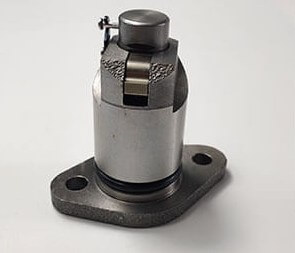
Timing chain tensioners play a critical role in maintaining proper chain tension and ensuring accurate engine timing. In many modern engine designs, the tensioner is sealed against the engine block using a rubber O-ring.
Although the O-ring is a small component, its sealing performance directly affects the reliability of the tensioner system. In the automotive aftermarket, improper O-ring design, material selection, or installation is one of the most common causes of oil leakage and premature component failure.
Role of the O-Ring in Timing Chain Tensioners
The O-ring functions as a radial sealing element between the tensioner body and the engine block. Its primary purpose is to prevent engine oil leakage while maintaining stable hydraulic pressure within the tensioner.
A properly designed and installed O-ring ensures:
- reliable sealing performance
- stable hydraulic pressure inside the tensioner
- improved durability and service life
Without proper sealing, oil pressure loss may affect the performance of the tensioner and the entire timing system.
Four Common O-Ring Issues in the Aftermarket
In the aftermarket, O-ring related problems usually come from dimension control, material quality, installation practices, or packaging protection.
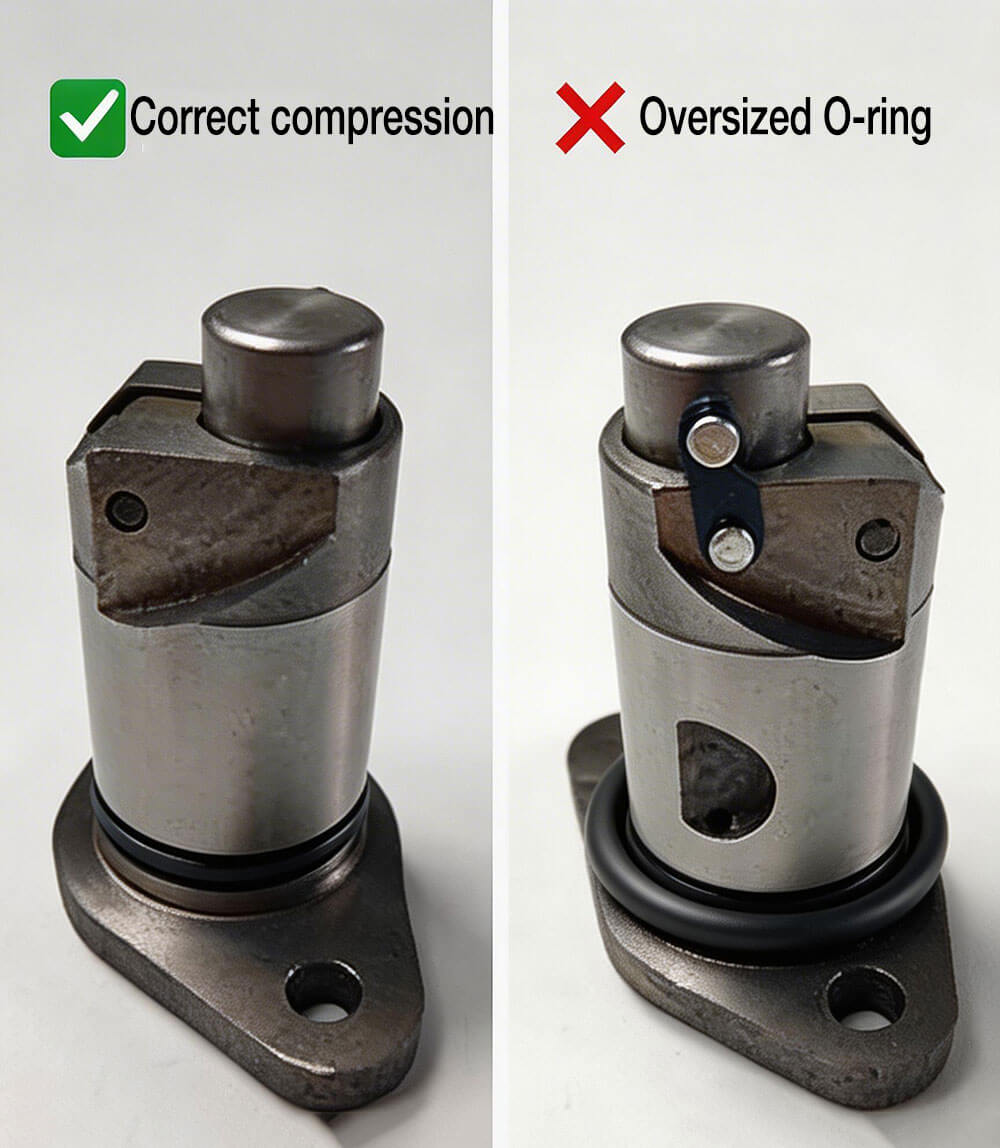
1. Incorrect O-Ring Size
Incorrect O-ring dimensions may prevent proper compression between the tensioner and the engine block, resulting in oil leakage after installation.
Even a small deviation in cross-section diameter or inner diameter may compromise the sealing performance.
2. Poor Material Quality
Low-grade rubber materials may degrade quickly when exposed to high temperatures and engine oil.
Typical problems include: hardening, cracking, swelling, loss of elasticity.
Most OEM-level O-rings are made from NBR (Nitrile Rubber) or FKM (Viton) compounds designed for high-temperature engine environments.
3. Improper Installation
Improper installation during engine repair is another common cause of sealing failure.
If the O-ring is:
- twisted
- pinched
- misaligned
the sealing surface may be compromised, resulting in oil leakage.
4. O-Ring Displacement During Transport
If the O-ring is not properly secured, it may shift or fall off during packaging or transportation.
When the installer does not notice the missing O-ring, the tensioner may be installed without proper sealing.
This issue is occasionally observed in poorly packaged aftermarket products.
Typical Field Symptoms
When O-ring sealing problems occur, technicians may observe the following symptoms:
- oil leakage near the timing cover
- engine oil stains around the tensioner area
- repeated oil leaks after tensioner replacement
- abnormal engine noise caused by insufficient hydraulic pressure
Quality Control Recommendations
To reduce O-ring related issues, manufacturers should focus on several key areas:
- precise O-ring dimension control
- high-quality rubber materials suitable for engine environments
- stable installation design on the tensioner body
- proper packaging protection during transportation
Reliable suppliers typically perform additional checks such as:
- compression testing
- oil resistance testing
- high-temperature aging tests
These measures help ensure long-term sealing reliability.
Conclusion
Although small in size, the O-ring plays a vital role in ensuring the reliability and sealing performance of timing chain tensioners.
Proper design, material selection, and installation control are essential for maintaining product performance and reducing oil leakage risks in the automotive aftermarket.
FAQ – Timing Chain Tensioner O-Ring
What does the O-ring do in a timing chain tensioner?
The O-ring seals the tensioner against the engine block to prevent engine oil leakage and maintain proper hydraulic pressure inside the tensioner.
Can a damaged O-ring cause engine oil leaks?
Yes. A worn, damaged, or incorrectly installed O-ring can cause oil leakage around the timing chain tensioner.
What materials are commonly used for tensioner O-rings?
Most automotive tensioner O-rings are made from high-temperature resistant rubber compounds such as NBR or FKM, designed to withstand engine oil and heat.
Post time: Mar-18-2026